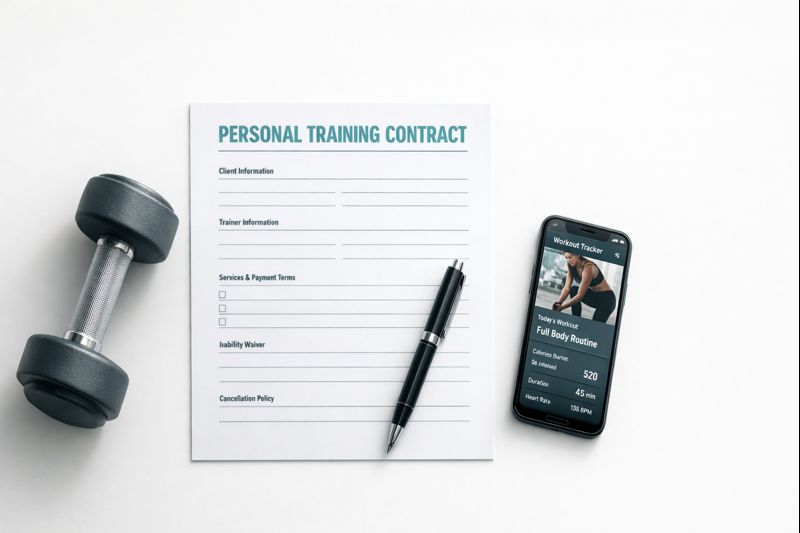
Why Liability Insurance Is Essential for Personal Trainers
Working as a personal trainer involves direct physical contact with clients and conducting exercises that can result in injuries. A single lawsuit can cost you more than an entire year's income - and liability insurance protects your assets and financial future.
Claims Statistics in the Fitness Industry
According to data from US fitness insurance providers:
- 15-20% of trainers will experience a client claim during their career
- Average claim value in the US ranges from $25,000 - $100,000
- Most common causes: Joint injuries (42%), spinal injuries (31%), muscle strains (18%)
- Statute of limitations: 1-6 years depending on state
- Average settlement: $45,000 for minor injuries, $150,000+ for serious injuries
Real-World Claim Examples
Case 1 - Knee Injury (2023)
Client performing weighted squats sustained ACL tear. Claim: $65,000 (surgery + rehab + lost wages).
Case 2 - Shoulder Injury (2024)
Client during kettlebell exercises damaged rotator cuff. Claim: $42,000.
Case 3 - Spinal Injury (2023)
Improperly prescribed load during deadlift resulted in herniated disc. Claim: $125,000.
Case 4 - Slip and Fall (2024)
Client tripped over resistance band left on floor. Fractured wrist. Claim: $38,000.
Case 5 - Equipment Malfunction (2023)
Faulty bench collapsed during exercise. Multiple injuries. Claim: $180,000.
What Does Personal Trainer Liability Insurance Cover?
Basic Coverage Types
1. General Liability Insurance (GL)
Covers third-party bodily injury and property damage:
- Client injuries during training sessions
- Damage to client property (watches, phones, glasses)
- Damage to rented studio space or equipment
- Slip and fall accidents
- Advertising injury claims
Typical coverage limits:
- $1,000,000 per occurrence
- $2,000,000 aggregate annual limit
2. Professional Liability Insurance (Errors & Omissions)
Protects against claims of professional negligence:
- Inadequate instruction or supervision
- Failure to properly assess client's fitness level
- Improper training program design
- Claims of negligence or malpractice
- Failure to recognize medical emergency
Typical coverage limits:
- $1,000,000 per occurrence
- $3,000,000 aggregate
3. Combined GL + Professional Liability
Most trainer policies bundle both coverages:
- Comprehensive protection for all business risks
- Single deductible
- Simplified claims process
- Often more cost-effective than separate policies
What's Covered in Detail
Medical Expenses:
- Emergency care costs
- Surgery and hospitalization
- Physical therapy and rehabilitation
- Ongoing medical treatment
- Pain and suffering compensation
Lost Wages:
- Client's lost income during recovery
- Future earning capacity if permanent injury
- Disability payments
Legal Defense:
- Attorney fees
- Court costs
- Expert witness fees
- Settlement costs
- Judgments (up to policy limits)
Property Damage:
- Repair or replacement of client property
- Damage to third-party property
- Damage to rented facilities
- Equipment replacement costs
Enhanced Coverage Options (Riders)
Product Liability:
If you sell supplements, equipment, or merchandise.
- Cost: +$50-150/year
- Coverage: $1M-2M
Cyber Liability:
Protects client data breaches and online training risks.
- Cost: +$100-300/year
- Essential for online trainers
Equipment Coverage:
Protects your training equipment.
- Cost: $150-500/year
- Coverage based on equipment value
Abuse & Molestation:
Critical coverage for solo trainers.
- Cost: +$200-400/year
- Required by many facilities
Personal Injury:
Covers libel, slander, defamation claims.
- Usually included in GL
- Important for social media presence
Common Exclusions - What's NOT Covered
Typical policy exclusions:
- Intentional acts - Deliberate harm to clients
- Sexual misconduct - Requires separate abuse coverage
- Substance use - Alcohol or drug influence
- Scope of practice violations - Acting as medical professional without license
- Criminal acts - Illegal activities
- Property owned by you - Your own equipment (separate policy needed)
- Prior known claims - Incidents before policy start
- Nuclear/war/terrorism - Standard insurance exclusion
- Punitive damages - In some states
- Business auto - Requires commercial auto insurance
Comparing Liability Insurance Providers 2025
Major Fitness Insurance Providers
| Provider | Annual Premium | GL Coverage | Prof. Liability | Certifications |
|---|---|---|---|---|
| IDEA Health & Fitness | $179-299 | $2M/$6M | $2M/$6M | IDEA member discount |
| K&K Insurance | $199-349 | $1M/$3M | $1M/$3M | NASM, ACE, ISSA accepted |
| Philadelphia Insurance | $225-450 | $2M/$4M | $2M/$4M | Studio/gym coverage available |
| Fitcovery | $189-329 | $1M/$2M | $1M/$2M | Online trainers specialty |
| Haylor Insurance | $199-399 | $1M/$2M | $1M/$2M | Group fitness specialists |
| Berxi | $159-279 | $1M/$2M | $1M/$2M | Monthly payment plans |
| CPH & Associates | $169-299 | $2M/$6M | Included | Health professionals focus |
Rates as of January 2025, actual premiums vary based on individual risk assessment
Professional Association Insurance Programs
NASM (National Academy of Sports Medicine)
- Group policy for certified trainers
- Coverage: $2M general / $2M professional
- Premium: $189/year for members
- Bonus: Free risk management resources
ACE (American Council on Exercise)
- Exclusive member insurance program
- Coverage: $1M-6M options
- Premium: From $179/year
- Includes: Cyber liability
NSCA (National Strength & Conditioning Association)
- Professional liability for strength coaches
- Coverage: $2M/$6M
- Premium: $199/year members
- Bonus: Legal hotline access
ACSM (American College of Sports Medicine)
- Comprehensive coverage for certified professionals
- Coverage: $2M general / $2M professional
- Premium: From $199/year
- Includes: Abuse & molestation
How to Choose the Right Policy
Step 1: Assess Your Risk Profile
High-risk factors:
- High-intensity training (CrossFit, HIIT, boot camps)
- Working with special populations (seniors, post-rehab)
- Heavy weightlifting programs
- Outdoor training (increased fall risk)
- Group fitness classes
- Home visits (liability at client location)
Step 2: Determine Minimum Coverage Limits
| Activity Type | Minimum GL | Minimum PL | Recommended Total |
|---|---|---|---|
| 1:1 personal training | $1M/$2M | $1M/$2M | $2M/$4M |
| Group fitness classes | $2M/$4M | $2M/$4M | $2M/$6M |
| CrossFit/High-risk | $2M/$6M | $2M/$6M | $3M/$6M |
| Studio owner | $2M/$6M | $2M/$6M | $5M-10M umbrella |
Step 3: Check Geographic Coverage
- Train only in one state → State-specific policy may suffice
- Train across state lines → Need multi-state coverage
- International retreats/camps → Worldwide coverage required
- Online clients abroad → Verify coverage in client's country
Step 4: Consider Your Business Structure
Sole Proprietor:
- Individual professional liability policy
- Personal assets at risk
- Premium: $159-299/year
LLC:
- Business policy in LLC name
- Some personal asset protection
- Premium: $199-399/year
S Corporation:
- Corporate policy + Directors & Officers insurance
- Strong asset protection
- Premium: $299-699/year
Insurance Purchase Process
Required Documentation
-
Personal Information
- Driver's license or state ID
- Social Security Number or EIN
- Contact information
-
Business Information
- Business name and DBA
- Business structure (sole prop, LLC, etc.)
- EIN/Tax ID number
- Years in business
-
Professional Credentials
- Certifications (NASM, ACE, ISSA, ACSM, etc.)
- CPR/AED certification
- Continuing education records
-
Activity Description
- Types of training provided
- Client demographics
- Training locations
- Annual revenue estimate
-
Claims History
- Past claims or lawsuits
- Current open claims
- Criminal background check (some insurers)
Where to Buy Insurance
Option 1: Direct from Insurer
- Online applications (instant quotes)
- Phone consultations available
- Direct relationship with carrier
- Examples: Berxi, K&K Insurance
Option 2: Through Professional Associations
- Group rates (often 10-30% cheaper)
- Coverage tailored to fitness industry
- Additional member benefits
- Examples: NASM, ACE, NSCA, ACSM
Option 3: Insurance Broker
- Compare multiple carriers
- Expert guidance on coverage needs
- Negotiate on your behalf
- Best for complex situations
Option 4: Online Marketplaces
- Compare quotes from multiple insurers
- User reviews and ratings
- Streamlined application process
- Examples: CoverWallet, Insureon, Simply Business
Application Tips
Common application questions:
-
What types of training do you provide?
- Be specific: strength, cardio, HIIT, yoga, etc.
-
Where do you train clients?
- Gym, studio, outdoors, client homes, online
-
How many clients do you train simultaneously?
- 1:1, small groups (2-5), large groups (6+)
-
What certifications do you hold?
- List all current certifications
-
Have you had prior claims or lawsuits?
- Full disclosure required
-
Estimated annual revenue?
- Be realistic - affects premium
Critical tips:
- Answer all questions completely and truthfully
- Concealing information can void coverage
- Describe full scope of activities - better to over-disclose
- Keep copies of all application materials
- Review policy carefully before signing
Claims Process - What to Do After an Incident
Step-by-Step Response Protocol
1. Immediate Actions (Day 0)
At the scene:
- Ensure client safety and call 911 if needed
- Do NOT admit fault or make statements about liability
- Take photos/videos of scene and equipment
- Collect witness contact information
- Document exactly what happened (write it down immediately)
- Preserve any video surveillance footage
2. Notify Your Insurer (Within 24-72 hours)
Contact methods:
- Call claims hotline (available 24/7)
- Submit online claim form
- Email claims department
- Follow up in writing
Information needed:
- Policy number and effective dates
- Date, time, location of incident
- Names and contact info of all parties
- Detailed incident description
- Photos and documentation
- Medical reports (if available)
3. Documentation Phase
Gather and preserve:
- Client health history forms (PAR-Q, medical clearance)
- Signed liability waivers
- Training logs and session notes
- Communication records (emails, texts)
- Equipment maintenance records
- Facility inspection reports
4. Cooperate with Claims Adjuster
Your responsibilities:
- Respond promptly to requests
- Provide complete documentation
- Be truthful and detailed
- Do NOT negotiate directly with claimant
- Refer all communication to insurer
- Follow adjuster's guidance
5. Legal Process (if necessary)
If lawsuit filed:
- Insurer assigns attorney (covered by policy)
- Participate in depositions as needed
- Provide requested information
- Attend court proceedings
- Trust your legal team
Important Timelines
| Event | Timeframe | Consequences of Delay |
|---|---|---|
| Report incident to insurer | 24-72 hours | Coverage may be denied |
| Insurer acknowledges claim | 3-5 business days | File complaint if delayed |
| Investigation completed | 30-60 days | Varies by complexity |
| Settlement offer (if accepted) | 60-90 days | Depends on negotiations |
| Lawsuit filing deadline | 1-6 years (varies by state) | Statute of limitations |
Do's and Don'ts After an Incident
DO:
- ✅ Report immediately to insurer
- ✅ Document everything in detail
- ✅ Cooperate fully with investigation
- ✅ Keep all records organized
- ✅ Follow medical advice (if you're injured too)
- ✅ Maintain professionalism with client
DON'T:
- ❌ Admit fault or liability
- ❌ Offer to pay medical bills directly
- ❌ Discuss incident on social media
- ❌ Contact client's attorney directly
- ❌ Destroy or alter any documentation
- ❌ Make independent settlement offers
Insurance by Business Type
Independent Contractor (1099)
Insurance needs:
- Own professional liability policy (gym's policy won't cover you)
- General liability for property damage
- Consider business personal property coverage
Typical cost: $159-299/year
Coverage recommendations:
- Minimum: $1M/$2M GL + $1M PL
- Optimal: $2M/$4M GL + $2M PL
Important notes:
- Gym may require proof of insurance
- Some gyms mandate minimum $1M coverage
- Read gym contract carefully for insurance requirements
Studio/Gym Owner
Insurance needs:
- Commercial general liability (higher limits)
- Professional liability for all trainers
- Property insurance for equipment/facility
- Workers' compensation (if employees)
- Commercial auto (if company vehicles)
Typical cost: $1,200-5,000/year
Coverage recommendations:
- Minimum: $2M/$6M GL
- Optimal: $5M-10M umbrella policy
- Require all contractors carry own $1M minimum
Additional considerations:
- Named additional insured for landlord
- Loss of income/business interruption
- Cyber liability (client data protection)
Employee (W-2)
When you need your own policy:
- Employer's coverage limits are low
- You do side training outside employment
- You want extra protection
- Employer requires you carry own policy
Employer liability:
Under respondeat superior doctrine, employer is primarily liable for employee actions within scope of employment. However:
- Personal liability still possible for gross negligence
- Coverage gap if you exceed scope of employment
- Protection during non-work hours
Typical cost: $159-249/year
Online/Virtual Trainer
Special considerations:
- Lower injury risk but still need coverage
- Cyber liability becomes critical
- Multi-state/international licensing issues
- Coverage for online program delivery
Recommended coverage:
- Professional liability: $1M/$2M
- Cyber liability: $100K-500K
- Media liability: $500K-1M
Cost: $179-329/year
Additional Insurance for Trainers
Accident Insurance (Personal)
Protects YOU (not clients) from injury costs:
Coverage:
- Medical expenses from training injuries
- Disability income if unable to work
- Accidental death & dismemberment
- Emergency room visits
- Follow-up care
Cost: $100-400/year
Recommended coverage: $25,000-100,000
Disability Income Insurance
Replaces income if you can't work:
Benefits:
- Long-term illness preventing training
- Injury causing work disability
- Partial disability (reduced work capacity)
Types:
- Short-term: 3-6 months coverage
- Long-term: Until age 65
Cost: $800-2,400/year (varies greatly by age, health)
Benefit: 50-70% of income
Business Personal Property Insurance
Protects your training equipment:
Coverage:
- Theft from car or gym
- Damage during transport
- Fire or natural disaster damage
- Equipment breakdown
Cost: $200-600/year
Coverage amount: Based on equipment value
Business Owners Policy (BOP)
Bundles multiple coverages:
Includes:
- General liability
- Property insurance
- Business interruption
- Often professional liability
Best for: Studio owners, established businesses
Cost: $500-2,000/year
Saves: 10-25% vs separate policies
Risk Management - Preventing Claims
Essential Documentation
1. Pre-Training Health Screening
Required elements:
- Complete medical history
- Current medications
- Past injuries and surgeries
- Physician clearance (if needed)
- Emergency contact information
- Signed acknowledgment of risks
Use standardized forms:
- PAR-Q+ (Physical Activity Readiness Questionnaire)
- ACSM Health Screening Questionnaire
- Custom health history form
2. Liability Waiver
Key components:
- Clear description of training activities
- Assumption of risk language
- Release of liability
- Indemnification clause
- Signed and dated by client
- Witnessed (recommended)
Note: Waivers don't prevent lawsuits but provide strong defense.
3. Informed Consent
Document client understanding of:
- Training program details
- Potential risks and benefits
- Right to refuse or modify exercises
- Responsibility to report discomfort
- Acknowledgment of no guarantees
4. Training Logs
Maintain detailed records:
- Date and time of each session
- Exercises performed (sets, reps, weight)
- Client's reported condition before/after
- Any complaints or concerns
- Modifications made
- Progress notes
Retention: Keep records minimum 3-7 years (varies by state)
Safety Best Practices
Before Each Session:
- Review client's health status
- Ask about current injuries or illness
- Check equipment condition
- Ensure adequate space and safety
- Verify client understands day's plan
During Training:
- Demonstrate proper technique first
- Spot heavy/unstable lifts
- Watch for signs of distress
- Modify exercises as needed
- Never leave client unsupervised with weights
- Stay within your scope of practice
After Training:
- Document session immediately
- Note any incidents or concerns
- Provide recovery guidance
- Schedule next session
- Update training plan
Communication Protocols
Risk-reducing practices:
- Set realistic expectations - No guarantee of specific results
- Obtain informed consent - Client understands what they're doing
- Document everything - Written records of all key communications
- Refer appropriately - Send to doctor when medical concern arises
- Maintain boundaries - Professional relationship at all times
- Continuing education - Stay current with industry standards
Red Flags - When to Refuse or Modify
Refuse training if:
- Client shows up intoxicated
- Medical clearance required but not obtained
- Client refuses to follow safety protocols
- You lack qualifications for client's needs
- Equipment is unsafe or inadequate
Modify training if:
- Client reports pain or unusual symptoms
- Recent injury or illness
- Extreme fatigue or poor sleep
- High stress or emotional distress
- Environmental concerns (heat, cold)
State-Specific Considerations
States Requiring Professional Licensing
Some states regulate personal trainers:
Licensure states:
- Louisiana - Requires Clinical Exercise Physiologist license for medical populations
- New Jersey - Athletic Trainer license for certain activities
Registration states:
- Washington DC - Personal fitness trainer registration
Insurance implications:
- Licensure affects coverage requirements
- May increase premiums
- Proof of license required for policy
- Continuing education documentation needed
State Liability Limits
Damage caps (medical malpractice-related):
- California: $250K non-economic damages (medical cases)
- Texas: $250K non-economic per defendant
- Most states: No caps for general negligence
Statute of limitations (personal injury):
- 1 year: Kentucky, Louisiana, Tennessee
- 2 years: Alabama, California, Colorado, Florida, Georgia, Illinois, Kansas, Michigan, Missouri, Nevada, New Jersey, New York, Ohio, Oklahoma, Oregon, Pennsylvania, Texas, West Virginia
- 3 years: Arizona, Connecticut, Delaware, Idaho, Iowa, Maine, Maryland, Massachusetts, Minnesota, Montana, New Hampshire, New Mexico, North Carolina, North Dakota, Rhode Island, South Carolina, South Dakota, Utah, Vermont, Virginia, Washington, Wisconsin, Wyoming
- 4 years: Arkansas
- 6 years: Indiana, Nebraska
Action: Know your state's statute of limitations - affects how long you need tail coverage.
FAQ - Frequently Asked Questions
Is liability insurance legally required?
Federal law: No federal requirement.
However, practically required because:
- Most gyms mandate $1M minimum for contractors
- Landlords often require proof of insurance
- Professional certifications may require it
- Banks may require it for business loans
- It's industry standard practice
Bottom line: Not legally required in most states, but effectively mandatory for business operations.
How much does trainer insurance cost?
Typical ranges in 2025:
- Basic coverage ($1M/$2M): $159-249/year
- Standard coverage ($2M/$4M): $229-349/year
- Premium coverage ($2M/$6M+): $299-499/year
Factors affecting cost:
- Training specialties (high-risk = higher premium)
- Coverage limits selected
- Number of clients/revenue
- Claims history
- Geographic location
- Additional coverages (cyber, equipment, etc.)
Does the gym's insurance cover me?
NO, typically not if you're an independent contractor.
Gym's insurance:
- Covers gym as entity
- Protects against gym negligence
- May not extend to independent contractors
- Limited or no coverage for your actions
- Won't cover you outside that gym
You need your own policy even if gym has insurance.
What if I train at multiple locations?
One policy typically covers all locations where you work.
Considerations:
- Notify insurer of all training locations
- Some policies limit to specific geographic areas
- Ensure coverage for home visits if you do them
- Verify outdoor training is covered
- Check coverage for temporary/one-time locations
Does online training require insurance?
YES - though risk is generally lower.
Reasons:
- Client can still get injured following your program
- Claims for negligent instruction possible
- Cyber liability for data breaches
- Professional liability for bad advice
Recommended: Professional liability + cyber liability
Cost: $179-329/year for online-specific policies
How long does coverage last after I cancel?
Standard policy: Coverage ends on cancellation date
Tail coverage (extended reporting period):
- Covers claims made after policy ends for incidents during policy
- Critical when changing careers or retiring
- Cost: 1-3x annual premium (one-time fee)
- Duration: 1 year to unlimited
Recommendation: Purchase tail coverage if leaving profession or switching insurers.
Can I deduct insurance premiums?
YES - Business insurance is tax-deductible.
Deductible as:
- Business expense on Schedule C (sole prop)
- Business expense on Form 1120S (S Corp)
- Operating expense on Form 1065 (partnership)
Amount: 100% of premium deductible
Savings: Reduces taxable income (saves ~22-35% of premium in taxes)
Summary - Insurance Checklist
Before Purchasing
- Assess your risk profile (training style, clients, locations)
- Determine minimum coverage needed ($1M vs $2M)
- Check requirements from gyms/facilities you work with
- Compare quotes from minimum 3 providers
- Review exclusions and limitations carefully
- Calculate total cost including add-ons
- Verify professional association discounts
When Purchasing
- Accurately describe all business activities
- Choose appropriate coverage limits
- Add necessary riders (cyber, abuse, equipment)
- Understand deductible amount
- Review claims process and contact info
- Save policy number and insurer contact
- Set calendar reminder for renewal (30 days before)
Ongoing Risk Management
- Collect signed health questionnaires from all clients
- Maintain detailed training logs
- Keep equipment well-maintained
- Follow industry safety standards
- Document all incidents immediately
- Renew policy before expiration
- Update insurer when business changes
- Take continuing education courses
Recommendations for Studio Owners
If you own a studio and work with independent contractors:
1. Require proof of insurance from all trainers
- Minimum $1M general + $1M professional
- Named additional insured (add your studio)
- Current certificate of insurance (annually)
- Verify coverage with insurer directly
2. Maintain your own comprehensive coverage
- $2M-5M general liability
- $2M professional liability
- Property coverage for equipment/facility
- Workers' comp (if employees)
- Cyber liability for client data
3. Establish safety protocols
- Standard forms for all trainers
- Equipment usage rules and signage
- Emergency response procedures
- Incident reporting system
- Regular safety audits
4. Consider umbrella policy
- Additional $5M-10M coverage
- Protects against catastrophic claims
- Relatively inexpensive ($500-1,000/year)
- Peace of mind for major incidents
Resources
Insurance Information:
- NASM Insurance Program
- ACE Insurance Benefits
- IDEA Health & Fitness Insurance
- K&K Insurance Fitness Programs
Industry Standards:
Legal Resources:
Sample Forms:
This article is for informational purposes only and does not constitute legal, insurance, or financial advice. Insurance requirements and regulations vary by state. Consult with a licensed insurance professional and attorney specializing in fitness industry law for guidance specific to your situation.
Author: Gymiti Team
Publication Date: November 27, 2025
Last Updated: November 27, 2025
Protect your career and assets - get professional liability insurance today. Compare quotes from multiple providers to find the best coverage for your training business.